When a Ceiling Is Ready for Paint
Some ceiling paint jobs are the victory lap of a bigger project — the final coats after popcorn removal or retexturing, when weeks of dusty work disappear under a clean white finish. Just as many stand alone. Ceilings yellow gradually from years of cooking, candles, fireplaces, and past smokers; the change is so slow you don't see it until furniture moves and a bright rectangle appears. Kitchens and baths grow dinginess and, in poorly vented rooms, mildew shadows. Old water stains linger long after the leak died. And sometimes the ceiling is simply wearing 1990s builder flat that's been scuffed by a decade of bunk beds and ceiling fan blades. If any of that sounds like the view overhead, a repaint is the fastest renovation you can buy.
Why Ceilings Punish Amateur Technique
Painting a ceiling is nothing like painting a wall, which is why it's the room surface most often visibly done wrong. Gravity turns every overloaded roller pass into a fine mist and the occasional drip. Lap marks — those darker stripes where a dried edge got rolled over — show worse overhead because ceilings catch raking light from windows at a shallow angle all day. Cut lines where ceiling meets wall are the difference between a room that looks professionally finished and one that looks touched up. And stains laugh at ordinary paint: water rings, rust dots from old fasteners, and smoke residue bleed straight through two coats of standard flat unless the right primer seals them first. Pros solve all of this with sequence and product choice, not heroics — which is exactly what you're paying for.
The Process on Paint Day
Mask and cover
Floors sheeted, fans and fixtures bagged or dropped, wall tops taped. Good masking is why the room afterward looks like nothing happened except the ceiling got new.
Fix the small stuff
Nail pops, hairline cracks, and dings get filled and spot-sanded. Paint magnifies what's beneath it; five minutes of filler beats a permanent shadow.
Prime with purpose
Stain-blocking primer over water marks and smoke residue; drywall primer over fresh compound; bonding primer over glossy or unknown old surfaces. Matching primer to problem is most of the battle.
Roll it right
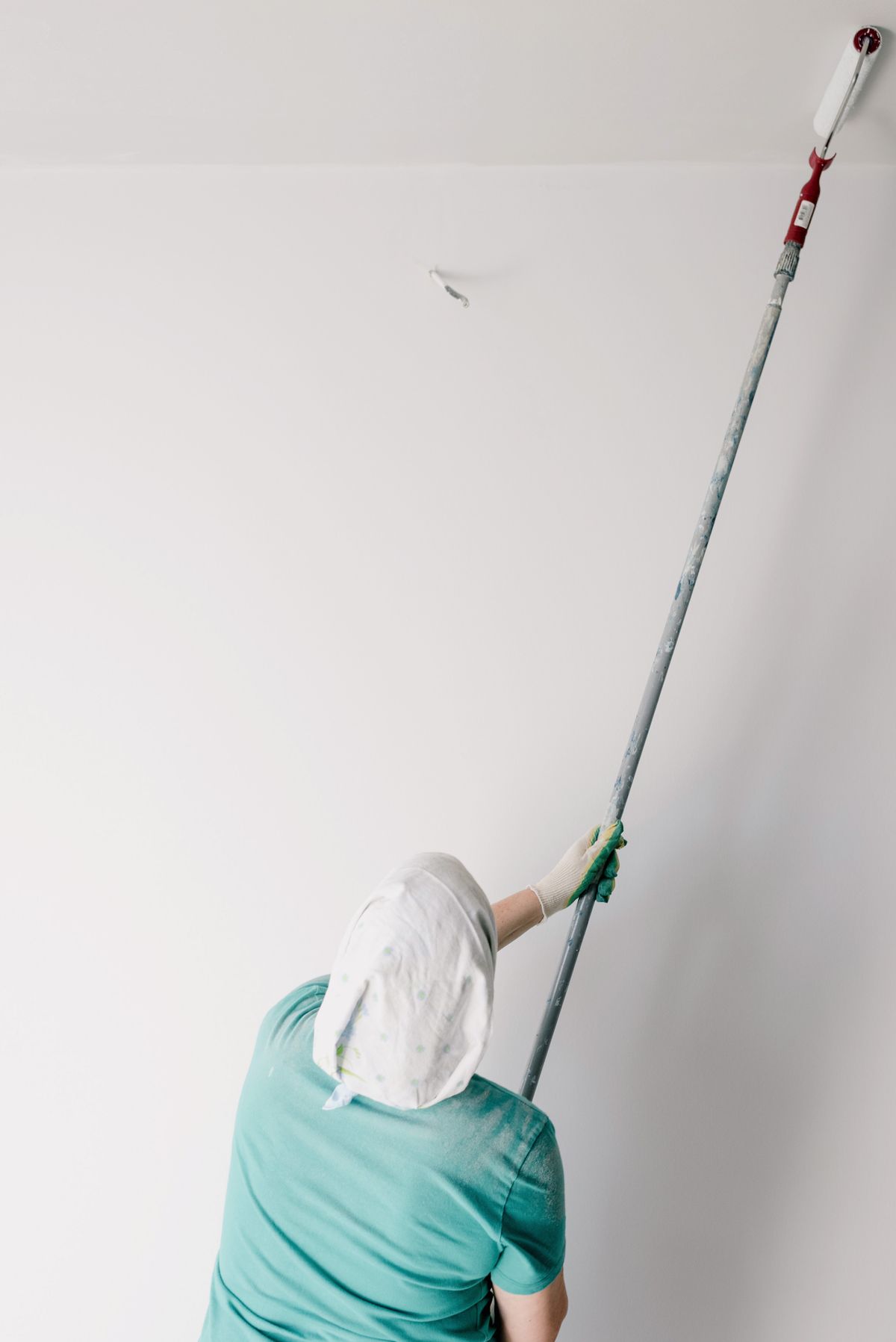
Two coats of quality ceiling flat, applied in overlapping passes worked toward the light so lap lines vanish. Edges cut cleanly by hand — no wobbling tape lines.
Unmask and inspect
Masking comes down, the room goes back together, and the finish gets checked in daylight and lamplight both before the job is called done.
Fixtures and fans: paint day is the cheapest moment to swap a dated flush-mount or a wobbling fan, since everything is already masked and laddered. Mention any swaps in your quote request — coordinating them into the sequence is trivial ahead of time and annoying after.
Choosing Paint for Humid-State Rooms
Product choice matters more here than in dry climates. Living areas and bedrooms want a true ceiling flat — the dead-matte finish that hides roller texture and framing waves better than anything else. But Central Arkansas bathrooms are another matter: months of sticky outdoor air plus daily showers make flat paint in a bathroom a mildew farm. There, a mildew-resistant kitchen-and-bath formula in matte or eggshell earns its keep, trading a whisper of sheen for a surface that wipes clean and resists spotting. Kitchens with serious cooking benefit from the same. As for color: ceiling white is the overwhelming choice for good reason — it maximizes the light bounce these projects are usually chasing — but a softened white tinted toward the wall color, or a full color-drenched ceiling in a dining room or study, are easy requests when you want the room to feel deliberate. The quote conversation covers it; the paint aisle guesswork is the pro's problem.
What Ceiling Painting Costs
As a planning range, professionally painting a standard-height ceiling in Little Rock commonly runs about $1–$2.50 for each square foot, materials included — a typical bedroom in the low hundreds, a whole single-story interior's ceilings often in the $1,500 to $3,500 neighborhood depending on prep, height, and stain-blocking needs. Bundled behind removal or retexturing it's cheaper still, since masking and setup are already done. Firm numbers come from the free quote, not the internet; these ranges just keep expectations honest while you plan.
Paint Alone, or Paint Plus Prep? A Quick Self-Check
Paint fixes color, dinginess, mild staining (with primer), and tired-looking but sound surfaces. Paint does not fix texture you dislike, crumbling material, active leaks, sags, or open cracks — it just gives them a fresh coat to be wrong under. A one-minute self-check before requesting a quote: press gently on any suspect area (movement means repair first), rake a flashlight across the surface at night (waves and patches show instantly), and decide whether the texture itself is staying (if not, you're shopping for removal or retexturing, with paint as the final step). Describing what you found takes one sentence on the quote form and gets you an accurate number the first time, instead of a paint quote that turns into a prep conversation on arrival day.
There's a happy version of this check, too: if your ceilings are smooth, sound, and simply yellowed with age, you've found the cheapest dramatic upgrade in the entire house. Whole-home ceiling repaints are quick, tidy, and transformative in Little Rock's older stock, where decades of incandescent-era dinge can hide how good the bones really are.
Scheduling Around Arkansas Weather
Interior painting is a year-round trade here, but the calendar still has opinions. Humid July stretches lengthen dry times between coats, so summer projects breathe better with a box fan and the HVAC running dry. Winter is a quietly excellent season — indoor humidity drops, paint cures crisply, and schedules are looser than during spring's post-storm repair rush. If your ceiling project follows storm damage, the painting stage simply waits until repairs and any insurance documentation wrap. None of this changes the outcome; it changes how the days are sequenced, and a local pro plans it without being asked.
Ceiling Painting Questions
Is painting straight over the popcorn a reasonable shortcut?
It's possible — and the result reads exactly as what it is: popcorn with paint on it. Fresh paint brightens the texture but locks it on harder — painted popcorn is significantly more work to remove later, a cost you'll find in the cost guide. And if the texture predates the 1990s, even paint-rolling disturbs it enough that testing first is the wise move. Worth a conversation before the roller comes out.
Will primer really hide a dark water stain?
The right primer will — dedicated stain-blockers exist precisely for water rings, rust, and smoke, and they seal in one or two coats what ordinary paint can't smother in five. The stain's cause has to be dead first; a live leak wins against any primer ever made.
How disruptive is a ceiling repaint?
Among the least disruptive projects on this site. A room is masked, painted, and back in service the same day or the next; low-odor modern paints mean sleeping in the house is no issue. Whole-home ceiling repaints are usually sequenced a few rooms at a time so life continues around them.
Which white should I actually choose?
For most rooms, a dedicated ceiling white one shade softer than stark — pure bright whites can read cold and clinical against Little Rock's warm interior light. If your walls are warm neutrals, a ceiling white with a hint of the same warmth keeps the room coherent. The pro can brush two samples on the actual ceiling; five minutes of looking beats any online swatch debate.
Do walls and ceilings need to be painted together?
No — ceilings alone are a completely normal scope, especially after removal or repair work. That said, if walls are on your someday list, doing ceilings first is the right order, since ceiling painting is the drippier trade. The quote can price both so you can decide with numbers.
A Brighter Room by This Weekend
Free ceiling painting quotes from a licensed, insured Little Rock professional — on its own or as the finishing coat of a bigger ceiling project.